


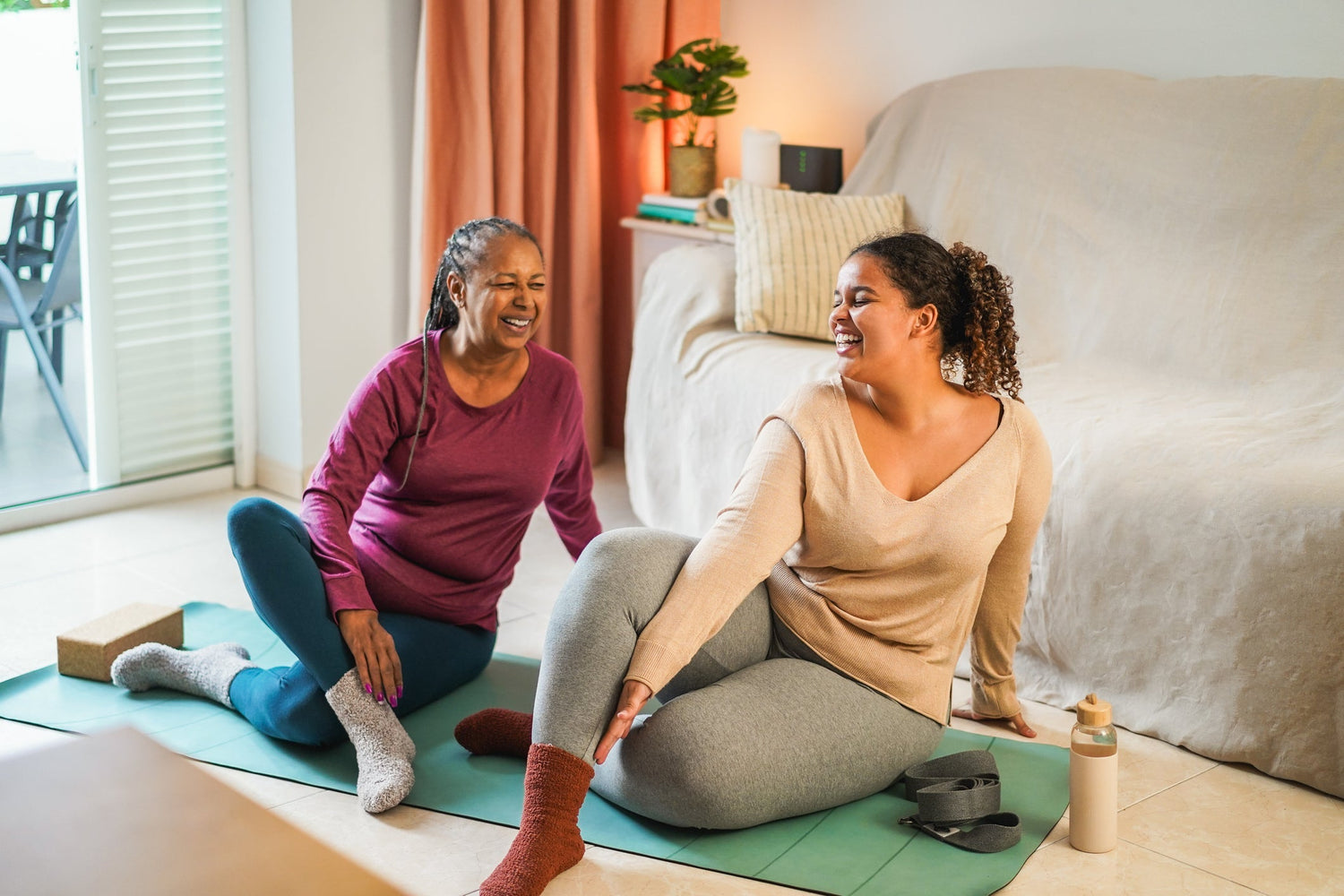
Living in a compact apartment doesn't mean sacrificing your fitness goals. Whether you're in a studio, one-bedroom, or sharing a small space, you can build an effective workout routine that transforms your limited square footage into a powerful training ground. The main thing is to understand how to maximize what you have, embrace creativity, and adapt traditional exercises to fit your environment.
Assess Your Space and Set Realistic Goals
Take inventory of your available space. You don't need a dedicated home gym — just enough room to extend your arms and lie down comfortably. Even a 6x6-foot area can become your fitness zone. Clear out unnecessary furniture or rearrange items to create a designated workout corner. This mental and physical boundary helps you commit to regular exercise and signals to your brain that it's time to focus on fitness.
Consider your ceiling height, too. Low ceilings might limit jumping exercises, but they won't stop you from building strength, flexibility, and endurance. The beauty of apartment workouts is learning to work with what you have rather than dwelling on what you lack.
The Mental Game: Staying Motivated in Your Apartment
Working out at home requires discipline. Create a pre-workout ritual: change into workout clothes, play specific music, or set out your equipment. These cues trigger your mind to shift into exercise mode.
Track your progress in a notebook or app. Seeing improvements in reps, hold times, or workout consistency provides motivation when your space feels limiting. Take progress photos monthly to visualize changes that daily mirror checks might miss.
Consider virtual workout partners. Video call a friend during workouts, join online fitness communities, or follow live-stream classes. Social accountability combats the isolation that apartment workouts can sometimes create.
When You Need More Space
As your fitness journey evolves, you might find that your current apartment genuinely limits your goals. Perhaps you want space for larger equipment, a dedicated workout room, or simply more square footage to move freely. If you're in the Raleigh area and considering an upgrade, platforms like SpareRoom can help you find larger rental options or roommates in places like Raleigh, Boston, or NYC, to share costs with, potentially making more spacious living — and workout space — affordable.
Essential Equipment for Small-Space Fitness
The right equipment can transform your apartment into a versatile gym without cluttering your living space. Focus on compact, multi-functional tools that can be easily stored when not in use.
-
Resistance bands are the ultimate space-saving tool. They weigh almost nothing, fit in a drawer, and provide variable resistance for dozens of exercises targeting every muscle group. Loop bands, therapy bands, and resistance tubes with handles all serve different purposes and cost less than a monthly gym membership.
-
A yoga mat serves as your foundation, providing cushioning and grip while defining your workout space. Roll it up and tuck it beside your couch or under your bed when finished.
-
Adjustable dumbbells offer incredible value for small spaces. Unlike traditional dumbbell sets that require racks, adjustable versions let you change weight plates on a single handle, replacing an entire weight collection with one compact tool.
-
A jump rope delivers intense cardio in minimal space. If your downstairs neighbors are sensitive to noise, opt for a weighted ropeless jump rope that provides the same arm workout without the actual rope hitting the floor.
-
Suspension trainers like TRX systems attach to door frames and enable hundreds of bodyweight exercises. When you're done, they pack away into a bag smaller than a shoebox.
Bodyweight Exercises: Your Foundation
Your body is the most versatile piece of equipment you'll ever own. Bodyweight exercises require zero equipment and minimal space while building functional strength and endurance.
-
Push-up variations work your chest, shoulders, triceps, and core. Standard push-ups, wide-grip, diamond, decline (feet elevated), and incline (hands elevated) versions all target muscles differently. Can't do a full push-up yet? Start with wall push-ups or knee push-ups and progress from there.
-
Squats and lunges build lower-body strength without equipment. Standard squats, sumo squats, split squats, reverse lunges, and walking lunges (if you have a hallway) can all be performed in a tiny footprint. Add a pulse at the bottom or slow down your tempo to increase difficulty without adding weight.
-
Planks are space-efficient core builders. Hold a standard plank, try side planks, add shoulder taps, or incorporate mountain climbers for cardio. The variations are endless, and you only need enough floor space to lie down.
-
Burpees combine strength and cardio into one movement that requires about six feet of space. They're challenging, effective, and burn calories rapidly — for apartment dwellers who want maximum results in minimum time.
Creating Effective Workout Routines
Structure is essential when working out at home. Without the gym environment to motivate you, having a plan keeps you consistent.
-
Circuit training works exceptionally well in small spaces. Set up 4-6 exercises, perform each for 30-45 seconds with 15 seconds of rest between, then repeat the circuit 3-4 times. This format maintains your heart rate, builds strength, and finishes quickly — ideal for busy schedules.
-
HIIT (High-Intensity Interval Training) maximizes calorie burn in minimal time and space. Alternate 20-40 seconds of intense effort with equal or slightly longer rest periods. Exercises like high knees, jumping jacks (or modified low-impact versions), squat jumps, and quick feet all work in tight quarters.
-
Strength-focused days should target different muscle groups. Monday could be upper body (push-ups, tricep dips using a chair, resistance band rows), Wednesday could be lower body (squats, lunges, glute bridges), and Friday could be full-body or core-focused.
Navigating Noise Concerns
Apartment living often means sharing walls, floors, and ceilings with neighbors. Being considerate doesn't mean you have to abandon effective workouts. You just have to adapt them.
Replace jumping jacks with step-outs (stepping side to side rather than jumping). Substitute jump squats with regular squats performed with a slow, controlled tempo. Use a thick yoga mat or add a puzzle mat layer underneath for additional sound absorption.
Schedule workouts during reasonable hours, typically between 9 AM and 8 PM, when noise is more acceptable. If you prefer early morning or late evening sessions, stick to quieter, low-impact routines during those times.
Conclusion
Small-space living is no excuse for neglecting fitness. With creativity, the right minimal equipment, and strategic planning, your apartment becomes a capable training facility. Focus on progressive overload, stay consistent, and remember that fitness success comes from dedication, not square footage. Your compact apartment might actually be your greatest fitness asset — eliminating excuses and forcing you to discover just how effective simple, focused training can be.


Leave a comment
All comments are moderated before being published.
This site is protected by hCaptcha and the hCaptcha Privacy Policy and Terms of Service apply.